The Bruised Reed and the Kindness That Restores
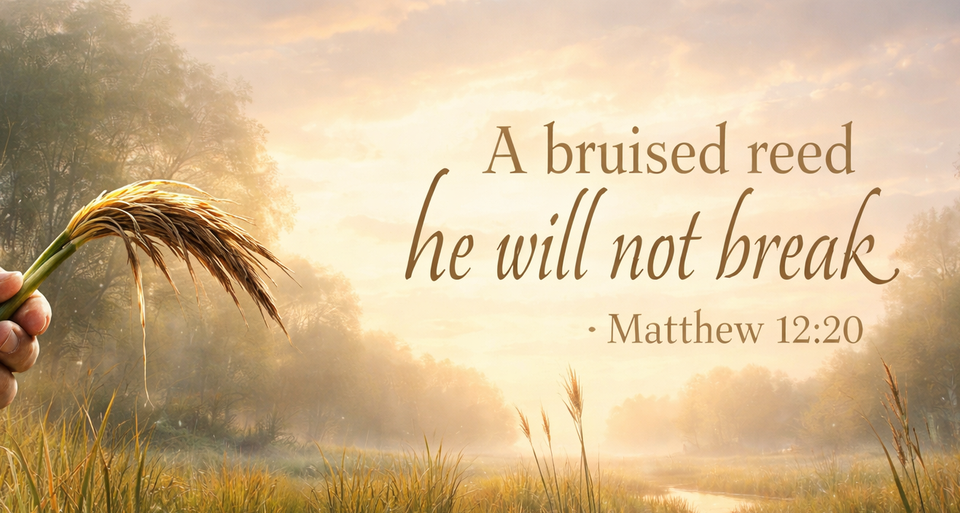
There is a reason the Spirit chose this image when revealing the heart of the Messiah:
A bruised reed He will not break, and a smoldering wick He will not quench. (Isaiah 42:3; Matthew 12:20)
In the ancient world, a reed was common and easily discarded. It grew in marshes and riverbanks, used for measuring rods, writing pens, simple flutes, even walking staffs. If it bent or cracked, it was no longer straight, no longer useful, and it was thrown away without thought. A wick in an oil lamp, once it began to sputter and smoke, was pinched out and replaced. Neither was worth repairing. Both were weak, inconvenient, and expendable. And yet the Servant of the Lord is described not by how forcefully He conquers, but by how gently He handles what is already damaged. A bruised reed is not a symbol of rebellion in full strength. It is something already bent, already strained, already bearing the marks of pressure. And the Messiah does not snap it.
This is not sentimental poetry. It is theological revelation. It tells us what God is like when He encounters human frailty. It reveals the temperament of heaven toward those who are barely holding together. When Matthew applies this prophecy to Jesus, he does so in the context of Christ withdrawing from escalating conflict and quietly healing the multitudes. Strength restrained by mercy. Authority expressed through gentleness. In a world that admired dominance and despised weakness, this was shocking. The Messiah would not crush the already crushed.
This matters deeply in our moment. Many who sit in our churches, and many more who sit outside them, are not defiant rebels shaking their fists at heaven. They are bruised reeds. They are smoldering wicks. They are already bowed low under the weight of sin consciousness, shame, regret, addiction, broken relationships, financial ruin, and private failures that haunt them at night. I've learned this from years in the recovery ministries. They know their shortcomings. They replay their mistakes. They carry condemnation in their bones. Many of them have tried church and walked away feeling overly criticized, harshly judged, treated with spiritual superiority, and in many cases encountering what they themselves call, hypocrisy. In homeless ministry circles this word comes up often. They do not need to be broken further.
Yet much modern preaching still swings the hammer as if every listener were a hardened Pharisee rather than an exhausted prodigal. Often this tone stems from a theological assumption that the old man in Adam is still fully alive and overwhelmingly powerful, as though the cross weakened sin but did not decisively deal with it. When we preach from that lens, we unintentionally reinforce shame rather than announce freedom.
There is a difference between exposing sin so that healing may come and weaponizing sin so that fear may control. The gospel does confront, but it does not crush. It convicts, but it does not condemn. It reveals truth, but it does so in the light of a finished work. The Greek word translated “gospel” is euangelion. In the ancient world it meant good news, glad tidings, a royal announcement of victory. It was used when a battle had been won or when a new king had ascended the throne. It was not advice. It was not a demand. It was an announcement. Something decisive had already happened. At its heart it is the proclamation that Christ has ascended the throne of David, that the promised King now reigns, and that of the increase of His government and of peace there will be no end. (Isaiah 9:6–7)
The gospel is not merely about personal relief from guilt, it is the declaration that the rightful Son now rules, that His kingdom is advancing, and that His reign is marked not by crushing reeds but by restoring them. And if we are honest, the message of Christ crucified, risen, and enthroned often feels almost too good to be true, not because it minimizes sin, but because it magnifies mercy beyond what we think possible so that we have room to grow, even from falling. It is like a one year old learning to walk. Every time the child falls, the parent does not scold or shame, but gently picks them up, holds them close, whispers that it is okay, and sets them back down for another attempt. The falling is not proof that the child is rejected, it is part of the process of learning to stand, then walk. In the same way, our Father does not abandon us when we stumble. He lifts us, reassures us, and invites us forward again until maturity set in and we begin walking without even thinking about it. I call it being Holy more on accident than you ever did on purpose.
The good news is not that we are terrible and must try harder. The good news is that Christ entered our world of death, bore our condemnation, absorbed our shame, and rose as the beginning of a new humanity. The gospel is not moral bashing. It is resurrection proclamation. It does not merely inform us of our guilt; it announces that guilt has been dealt with. It does not simply highlight our failure; it declares that a new identity has been given in Christ. And resurrection changes hearts in ways condemnation never could.
I have watched this unfold over years of working in the homeless shelter. I have sat across from men who could go no further down into the pit of despair. They know their sin. They know their record. They know the bridges they burned and the faces they disappointed. They know the nights of addiction, the court dates, the broken promises, the children they've hurt who no longer speaks to them. They do not need a preacher to remind them how bad they are. They already believe that. What shocks them, what softens them, what causes their eyes to fill with tears, is when they hear that they are loved beyond what they deserve. That they are not merely tolerated by God but pursued. That they are not defined by their worst chapter. That in Christ they are not simply forgiven criminals but welcomed sons and daughters. When they hear that their old identity is not their final identity, something begins to move inside them.
The bruised reed begins to straighten. The smoldering wick flickers again.
There is something about unconditional, undeserved love that reaches where threats cannot. This is not softness on sin. This is confidence in the cross. If the cross was enough, then we do not need to supplement it with fear tactics. And when we resort to fear tactics to win people, we inevitably must continue using fear to keep them. I've seen it, even been a part of it. If condemnation was fully borne by Christ, then we do not need to reapply it to those who are already bleeding under it. Scripture says,
There is therefore now no condemnation for those who are in Christ Jesus. (Romans 8:1)
It does not say less condemnation. It says none. The Spirit convicts, yes, but conviction is not humiliation. Conviction is light breaking in so that healing can begin. Condemnation drives people away from God, but its the goodness of God that is meant to lead them to repentance. (Romans 2:4)
The bruised reed passage reveals something about the heart of Jesus. He is strong enough not to crush. He is holy enough not to compromise. He is merciful enough to restore. There is a place for sober clarity about judgment. There is a place for prophetic warning. But when the audience is already crushed under shame, the tone of heaven shifts. Heaven does not shout at the wounded. Heaven kneels beside them. The prodigal son rehearsed a speech about how unworthy he was. The father interrupted it with a robe. (Luke 15:17–24) Transformation began not with humiliation but with embrace. This is why our Bible studies went from 7 residents to over 40 on a regular basis. Hallelujah!!!
What transforms a life is not being told repeatedly how sinful you are. Most broken people already know that intimately. What transforms a life is being told repeatedly who you now are in Christ. Identity fuels transformation more powerfully than intimidation ever could. When a man begins to believe he is to no longer identified as an addict but a beloved son, his posture changes. When a woman begins to believe she is not a failure but chosen and cherished, she rises differently. When someone who has known only rejection discovers acceptance, the heart opens.
In the shelter I have watched hardened faces soften when they realize they are not a project to God. They are not a case file in heaven. They are seen, known, and wanted. And when they hear that discipleship is not probation but participation in a new life, hope awakens.
Broken people not only need to be told how far they have fallen. They need to know how far His love descended. They need to see with their own eyes that the love we speak about is real, embodied, patient, consistent, expressed in meals served, prayers offered, conversations held, and dignity restored. When they witness love lived out by you, not merely preached, something inside them begins to trust again. The gospel is not a moral ladder thrown down for us to climb. It is a King who climbed down into our pit and carried us out. Now go and likewise, love everyone, and I do mean everyone.
If our preaching leaves people feeling smaller, more ashamed, and more distant from God than when they arrived, we must ask whether we are sounding like the Servant of Isaiah or like the accuser of the brethren. (Revelation 12:10) The bruised reed does not respond to force. It responds to careful hands. The smoldering wick does not respond to rebuke. It responds to oil. And the oil of heaven is mercy. (Luke 10:34)
The announcement that Christ has done what we could not do, that our sin has been dealt with decisively, that our shame has been carried, that our future is not chained to our past, this is what awakens love in the human heart. People will endure correction from someone who has convinced them they are loved. But they will run from someone who has convinced them they are merely tolerated. The almost too good to be true news is what compels loyalty. It is what ignites devotion. It is what causes a person who has known only despair to dare to believe again.
The Messiah does not break the bruised reed. And if we are to preach Him faithfully, neither should we. Let us announce the victory. Let us declare the finished work. Let us tell the weary that the war against them has ended. Let us proclaim that acceptance is not at the end of a moral marathon but at the beginning of a new birth. The gospel is good enough to stand on its own. And when the broken hear it clearly, truly, without mixture, they rise. Not because they were shamed into obedience, but because they were loved into life.
If these messages have encouraged or uplifted you, consider giving back by planting a seed. Your generosity helps continue this work and creates opportunities for others to grow and strengthen their faith.

Member discussion